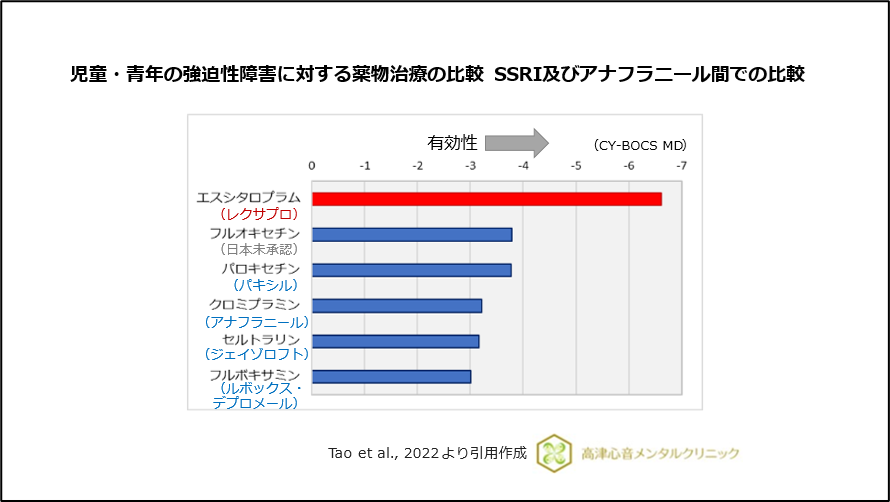
1) Tao Y, et al. : Comparing the efficacy of pharmacological and psychological treatment, alone and in combination, in children and adolescents with obsessive-compulsive disorder: A network meta-analysis. J Psychiatr Res, 148 : 95-102, 2022.
2) Ivarsson T, et al. : The place of and evidence for serotonin reuptake inhibitors (SRIs) for obsessive compulsive disorder (OCD) in children and adolescents: Views based on a systematic review and meta-analysis. Psychiatry Res, 227 : 93-103, 2015.
3) Skapinakis P, et al. Pharmacological and psychotherapeutic interventions for management of obsessive-compulsive disorder in adults: a systematic review and network meta-analysis. Lancet Psychiatry, 3 : 730-739, 2016.
5) Veale D, et al. : Atypical antipsychotic augmentation in SSRI treatment refractory obsessive-compulsive disorder: a systematic review and meta-analysis. BMC Psychiatry, 14 : 317, 2014.
6) Dold M, et al. : Antipsychotic Augmentation of Serotonin Reuptake Inhibitors in Treatment-Resistant Obsessive-Compulsive Disorder: An Update Meta-Analysis of Double-Blind, Randomized, Placebo-Controlled Trials. Int J Neuropsychopharmacol, 18 : pyv047, 2015.
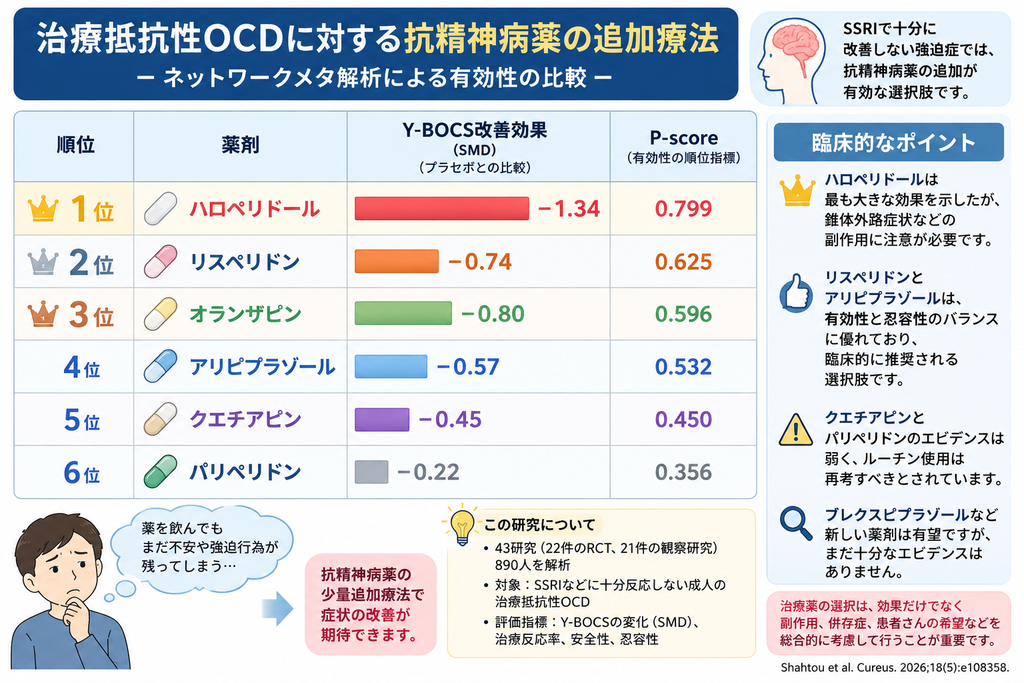
7)Shahtou A, et al.: Efficacy of Antipsychotic Augmentation Therapy in Treatment-Resistant Obsessive-Compulsive Disorder: A Systematic Review and Meta-Analysis. Cureus, 18: e108358, 2026.
8) Laoutidis ZG, et al. : Glutamatergic Agents as Add-On Medication for the Treatment of Obsessive-Compulsive Disorder: A Systematic Review and Meta-Analysis. J Clin Psychiatry, 77 : e1576-e1583, 2016.
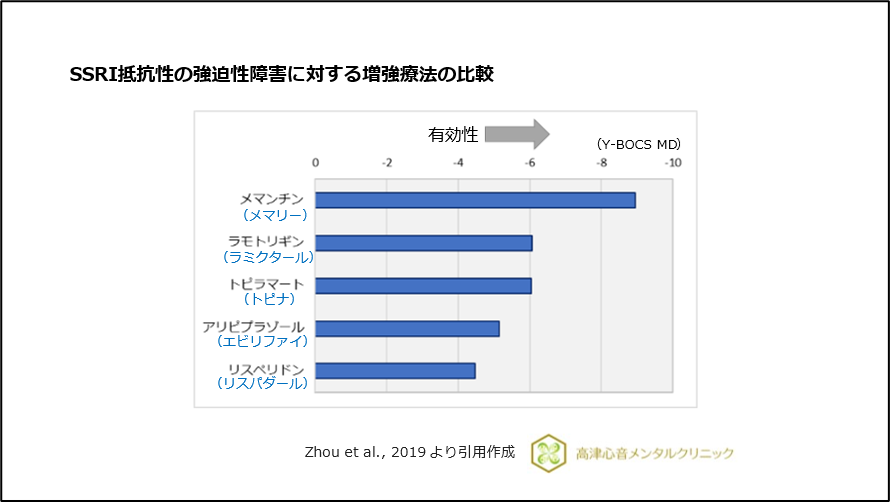
9) Zhou DD, et al. : Augmentation agents to serotonin reuptake inhibitors for treatment-resistant obsessive-compulsive disorder: A network meta-analysis. Prog Neuropsychopharmacol Biol Psychiatry, 90 : 277-287, 2019.
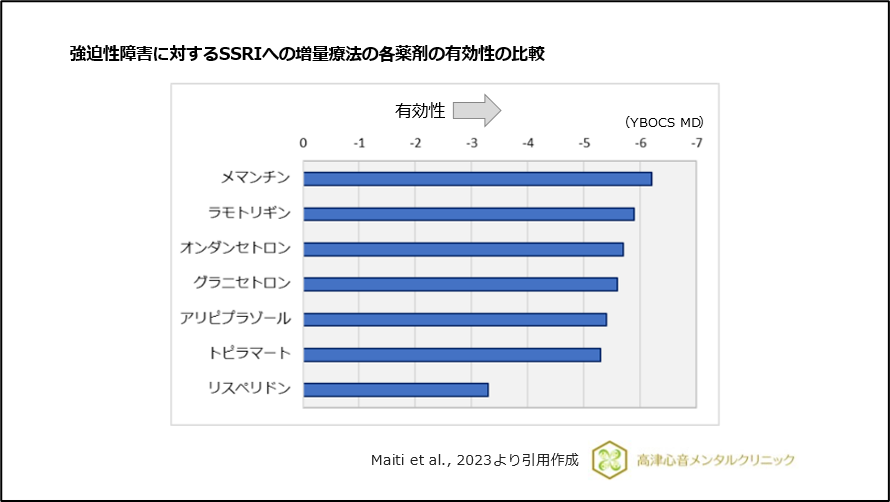
10) Maiti R, et al. : Pharmacological augmentation of serotonin reuptake inhibitors in patients with obsessive-compulsive disorder: A network meta-analysis. Acta Psychiatr Scand, 148 : 19-31. 2023.
11) Pauls DL, et al. : Obsessive-compulsive disorder: an integrative genetic and neurobiological perspective. Nat Rev Neurosci, 15 : 410-24, 2014.