作用・特徴
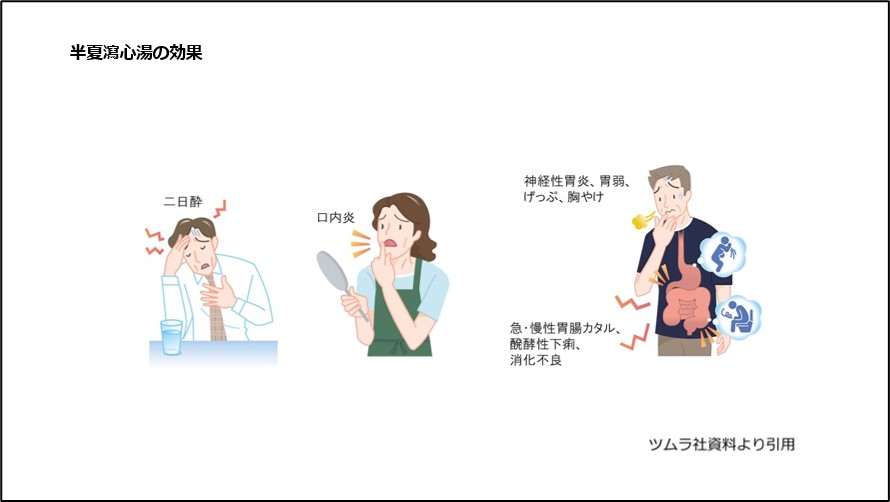
半夏瀉心湯(ハンゲシャシントウ)は神経性胃炎、下痢、過敏性腸症候群、口内炎、二日酔い等に使用されます(図1)。
図1 半夏瀉心湯の効果
不安やストレスがある人の胃腸弱に使用されます。
半夏瀉心湯は近年、口内炎、口腔潰瘍の治療効果が報告されています1)。
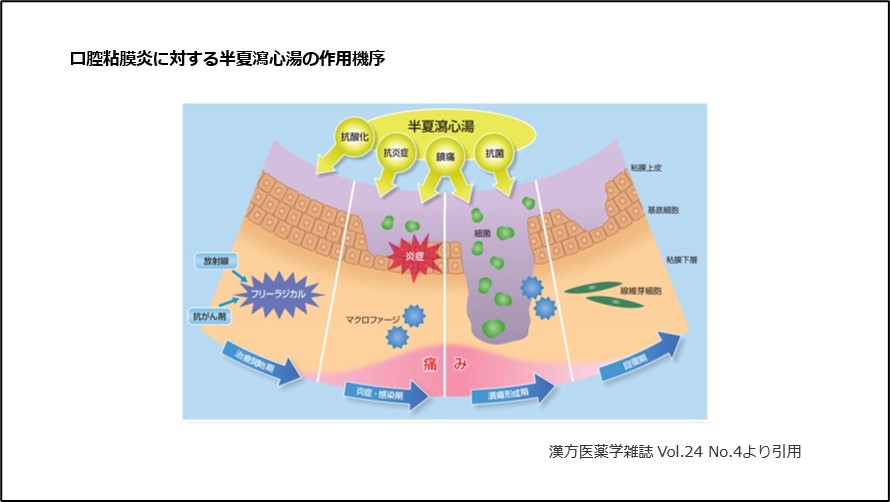
メカニズムには、抗酸化作用、抗炎症作用、鎮痛作用、抗菌作用が関与しているとされています2)~6)。
抗炎症作用では、化学療法に伴うプロスタグランジンE2の産生を抑制することや、炎症性サイトカインのIL-1αの産生を抑制することが報告されています3)、4)、(図2)。
図2 口腔粘膜炎に対する半夏瀉心湯の作用機序
また、難治性逆流性食道炎において、胃薬のプロトンポンプ阻害薬(PPI)と併用した際、消化不良症状のある患者では早期に症状が改善した報告がなされています5)。
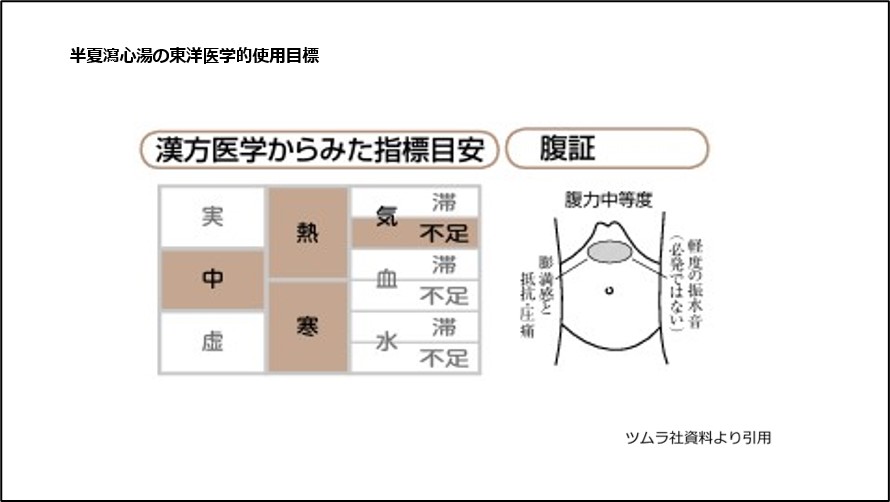
使用目標(証)は、体力中等度の人で、心窩部の膨満感、腹中雷鳴があり、悪心、嘔吐、下痢などを訴える場合に用いる。
- 1)食欲不振、軽度の上腹部痛などを伴う場合
- 2)不安・不眠などの精神神経症状を伴う場合
とされています。
図3 半夏瀉心湯の東洋医学的使用目標
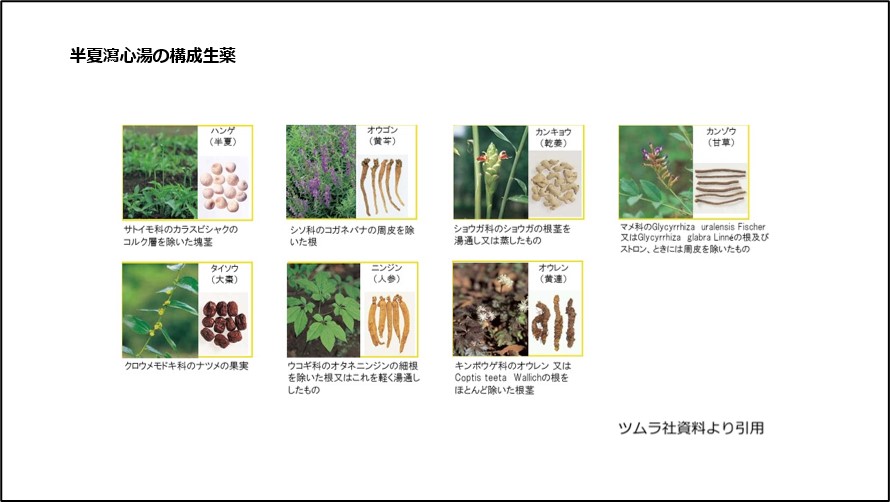
半夏瀉心湯は以下の生薬から構成されています(図4)。
- 半夏(ハンゲ)
- 黄芩(オウゴン)
- 乾姜(カンキョウ)
- 甘草(カンゾウ)
- 大棗(タイソウ)
- 人参(ニンジン)
- 黄連(オウレン)
図4 半夏瀉心湯の構成生薬
剤型
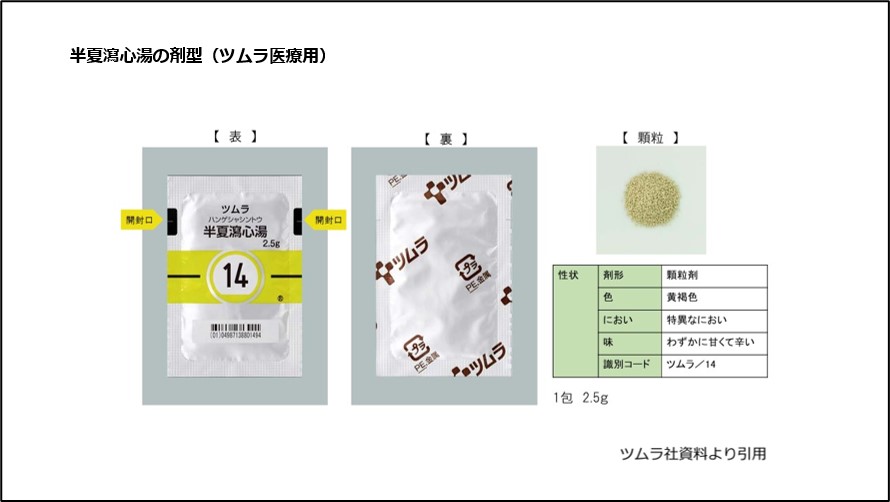
医薬品のツムラの漢方薬(14番)は1包顆粒2.5gとなっています(図5)。
図5 半夏瀉心湯の剤型(ツムラ医療用)
効能・効果
効能・効果は以下となっています。
みぞおちがつかえ、ときに悪心、嘔吐があり食欲不振で腹が鳴って軟便または下痢の傾向のあるものの次の諸症:
- 急・慢性胃腸カタル
- 醗酵性下痢
- 消化不良
- 胃下垂
- 神経性胃炎
- 胃弱
- 二日酔
- げっぷ
- 胸やけ
- 口内炎
- 神経症
用法・用量[ツムラ葛根湯(医療用)]
通常、成人1日7.5gを2~3回に分割し、食前又は食間に内服する。
なお、年齢、体重、症状により適宜増減するとなっています。
副作用
頻度は不明ながら以下が挙げられています。
重大な副作用
- 間質性肺炎
- 偽アルドステロン症
- ミオパチー
- 肝機能障害、黄疸
その他の副作用
参考
- 1) Taira K, et al.: The effect of Hangeshashinto on Oral Mucositis Caused by Induction Chemotherapy in Patients with Head and Neck Cancer. Yonago Acta Med, 63: 183-187, 2020.
- 2) Matsumoto C, et al.: Analysis of the antioxidative function of the radioprotective Japanese traditional (Kampo) medicine, hangeshashinto, in an aqueous phase. J Radiat Res, 56: 669-77, 2015.
- 3) Kono T, et al.: Multitargeted effects of hangeshashinto for treatment of chemotherapy-induced oral mucositis on inducible prostaglandin E2 production in human oral keratinocytes. Integr Cancer Ther, 13: 435-45, 2014.
- 4) Hato H, et al.: Comparison between hangeshashinto and dexamethasone for IL-1alpha and beta-defensin 1 production by human oral keratinocytes. J Oral Biosci, 66: 188-195, 2024.
- 5) Takeuchi T, et al.: Efficacy and safety of hangeshashinto for treatment of GERD refractory to proton pump inhibitors : Usual dose proton pump inhibitors plus hangeshashinto versus double-dose proton pump inhibitors: randomized, multicenter open label exploratory study. J Gastroenterol, 54: 972-983, 2019.