運動のうつ病に対する治療効果とメカニズムについて

うつ病にはどのような運動が効果的か?

運動はうつ病の治療に有効であることが従来報告されていました1)、2)。

しかし、どのような運動が有効かについては、明確な差が示されていませんでした。

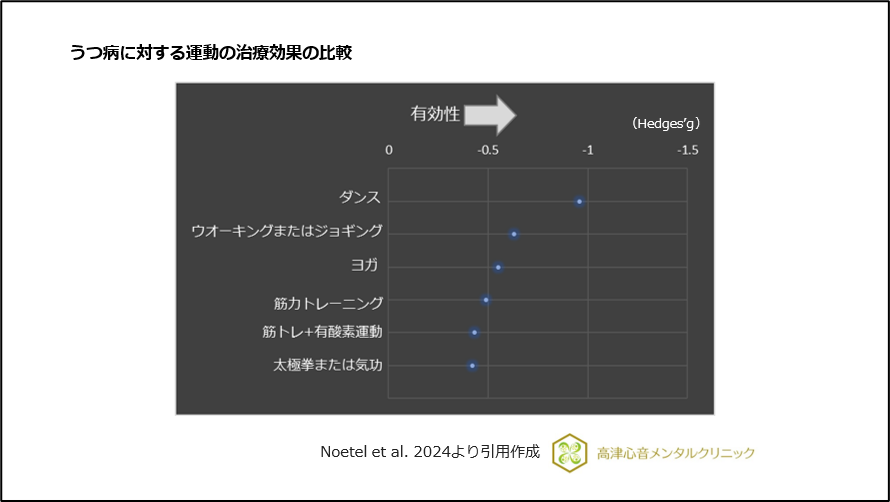
今回、2024年2月にうつ病に対する種々の運動の治療効果の比較が報告されました3)。

有効性では以下の順でうつ症状の改善において優れている結果でした(図1)。

  • ダンス
  • ウォーキングまたはジョギング
  • ヨガ
  • 筋トレ+有酸素運動
  • 太極拳または気功

図1 うつ病に対する運動の治療効果の比較

また、運動の強度では、軽い運動より負荷の強い運動がより効果がみられる結果でした(例:ランニング>ウォーキング)。

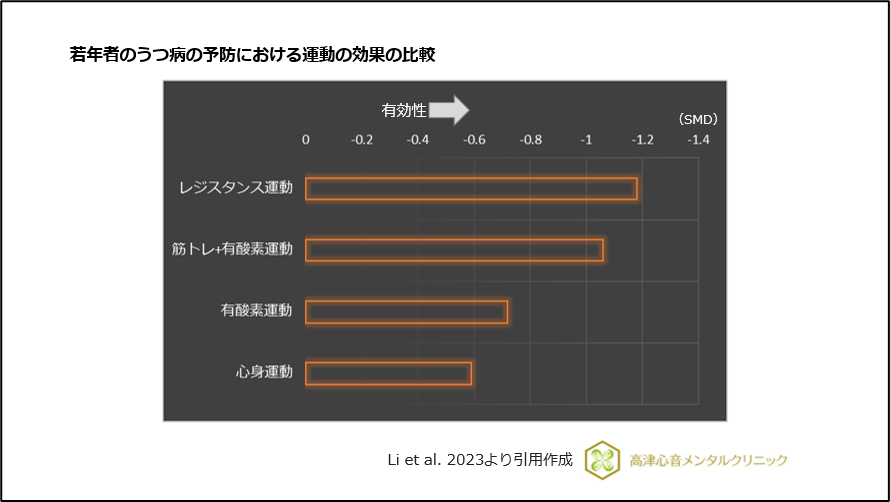
2023年に若年者のうつ病に対する運動の治療効果と予防の効果の比較が報告されており、予防では以下の順で有効性が示されました4)、(図2)。

  • レジスタンス運動(筋肉に負荷をかける動作を繰り返す行う運動、いわゆる筋トレ)
  • 筋トレ+有酸素運動
  • 有酸素運動
  • 心身運動(ヨガ、太極拳など)

図2 若年者のうつ病予防における運動の効果の比較

レジスタンス運動は近年、不安障害に対する治療効果も報告されています5)。

これらの結果は統合失調症に対する運動の治療効果と異なる結果でした。

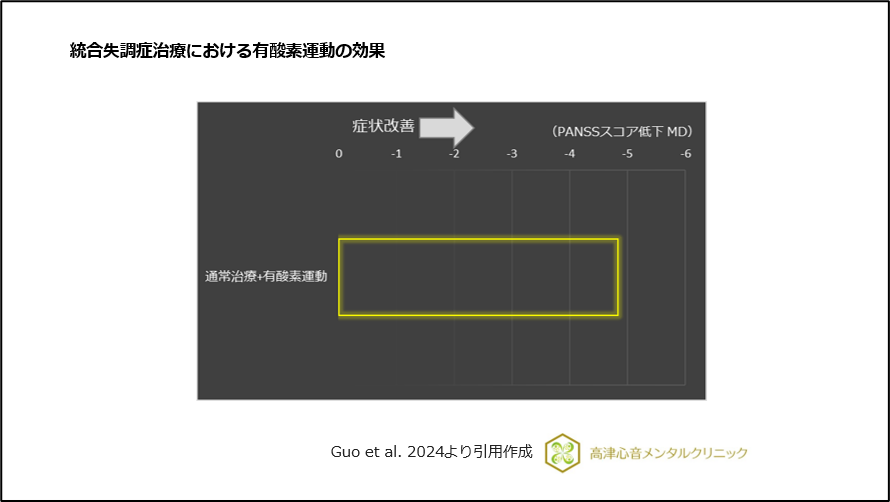
統合失調症では適度な有酸素運動が有効で、負荷の強い筋力トレーニング等では精神症状の改善効果はみられないことが報告されています6)。

薬物治療等の通常治療に有酸素運動を補助療法として追加することで、精神症状の改善効果が得られることが示されています(図3)。

図3 統合失調症治療における有酸素運動の効果

運動はどのようにうつ病に対し治療効果を発揮するか?

運動のうつ病に対する治療効果には、従来BDNF(brain-derived neurotrophic factor;脳由来神経栄養因子) という物質が関与するとされていました。

BDNFは海馬での神経新生や脳における神経の可塑性にかかわります。

抗うつ薬は脳内のBDNF産生を増加させることが報告されており、この作用は抗うつ薬のセロトニン等への作用とは別のうつ病改善の一つの作用と考えられています7)。

実際に運動を行うと血中のBDNF値は上昇することが報告されており8)、運動によるBDNF産生の増加がうつ病改善のメカニズムの一つと想定されていました。

しかし、運動することでなぜ脳におけるBDNF産生が増加するかの詳しいメカニズムはわかっていませんでした。

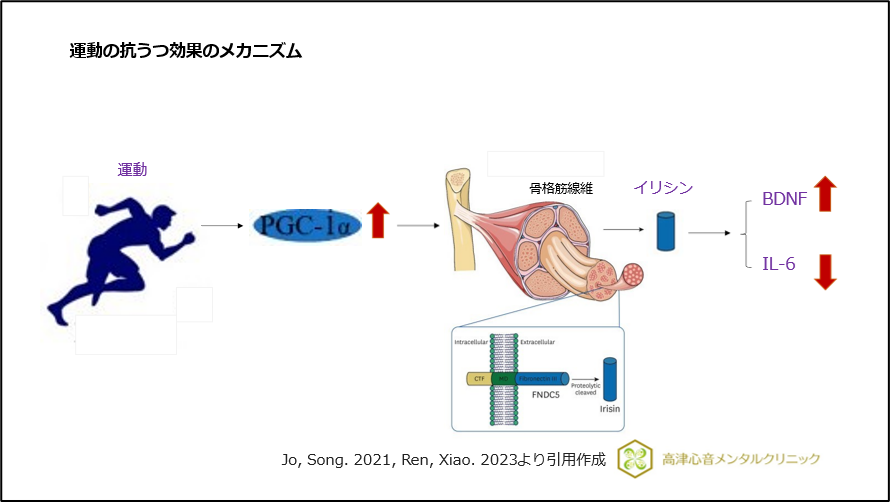
近年、運動することで転写因子のPGC-1α(peroxisome proliferator-activated receptor-gamma coactivator-1 alpha;ペルオキシソーム増殖因子活性化レセプターγ共役因子-1 alpha)の発現促進がおこり、PGC-1αは骨格筋からイリシンという生理活性物質(マイオカイン)が放出を促進することが報告されています9)、10)。

放出促進されたイリシンが、BDNF産生を増加させるととともに、IL-6(インターロイキン6)などの炎症因子を抑制することが、抗うつ効果のメカニズムと想定されています9)~11)、(図4)。

図4 運動の抗うつ効果のメカニズム

おひとりで悩んでいませんか?

うつ症状がある場合は、我慢せず早めの心療内科・精神科への受診をおすすめします。
まずはかかりつけ内科等で相談するもの1つの方法です。

ハートを包み込むイメージ

文献

  • 1) Heissel A, et al.: Exercise as medicine for depressive symptoms? A systematic review and meta-analysis with meta-regression. Br J Sports Med, 57: 1049-1057, 2023.
  • 2) Li J, et al.: Effect of exercise intervention on depression in children and adolescents: A systematic review and network meta-analysis. J Affect Disord, S0165-0327, 2023.
  • 3) Noetel M, et al.: Effect of exercise for depression: systematic review and network meta-analysis of randomised controlled trials. BMJ, 384: e075847, 2024.
  • 4) Zhang Y, et al.: Comparing the efficacy of different types of exercise for the treatment and prevention of depression in youths: a systematic review and network meta-analysis. Front Psychiatry, 14: 1199510, 2023.
  • 5) Yu Q, et al.: Comparative Effectiveness of Multiple Exercise Interventions in the Treatment of Mental Health Disorders: A Systematic Review and Network Meta-Analysis. Sports Med Open, 8: 135, 2022.
  • 6) Guo J, et al.: Efficacy and feasibility of aerobic exercise interventions as an adjunctive treatment for patients with schizophrenia: a meta-Analysis. Schizophrenia (Heidelb), 10: 2, 2024.
  • 7) Esalatmanesh S.: Effects of Antidepressant Medication on Brain-derived Neurotrophic Factor Concentration and Neuroplasticity in Depression: A Review of Preclinical and Clinical Studies. Avicenna J Med Biotechnol, 15: 129-138, 2023.
  • 8) Kramer BA,: Exercise elevates serum brain-derived neurotrophic factor in partially remitted depression. Psychiatry Res, 326: 115283, 2023.
  • 9) Jo D, Song J.: Irisin Acts via the PGC-1alpha and BDNF Pathway to Improve Depression-like Behavior. Clin Nutr Res, 10: 292-302, 2021.
  • 10) Ren J, Xiao H.: Exercise for Mental Well-Being: Exploring Neurobiological Advances and Intervention Effects in Depression. Life (Basel), 13: 1505, 2303.
  • 11) Alizadeh Pahlavani H.: Possible role of exercise therapy on depression: Effector neurotransmitters as key players. Behav Brain Res, 459: 114791, 2024.

執筆者

院長 宮本 浩司(みやもと こうじ)

院長 宮本浩司

川崎市・溝の口の心療内科・精神科
高津心音メンタルクリニック
・ 精神保健指定医
・ 日本精神神経学会認定専門医・指導医