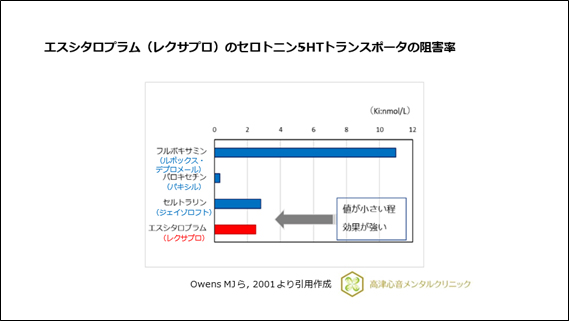
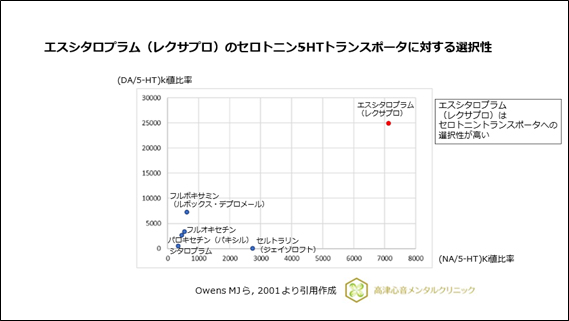
1)Owens MJ, et al.: Second-generation SSRIs: Human monoamine transporter binding profile of escitalopram and R-fluoxetine. Biol Psychiatry, 50: 345-350, 2001.
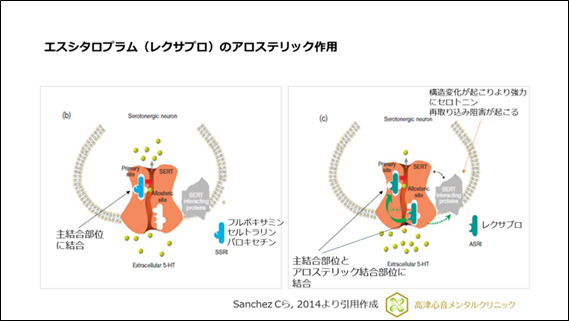
2)Sanchez C, et al.: A comparative review of escitalopram, paroxetine, and sertraline: Are they all alike? Int Clin Psychopharmacol, 29: 185-96, 2014.
3)Cipriani A, et al.: Comparative efficacy and acceptability of 21 antidepressant drugs for the acute treatment of adults with major depressive disorder: a systematic review and network meta-analysis. Lancet, 391: 1357-1366, 2018.
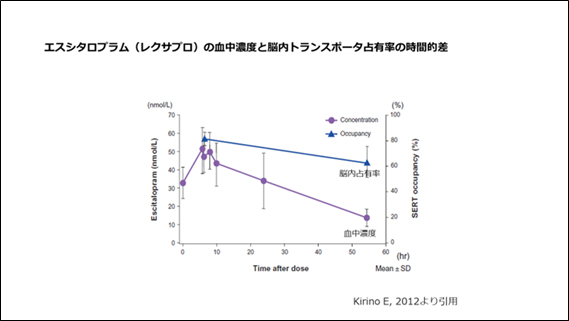
4)Kirino E.: Escitalopram for the management of major depressive disorder: a review of its efficacy, safety, and patient acceptability. Patient Prefer Adherence, 6: 853-61, 2012.
5)Montgomery S, et al.: Efficacy of escitalopram compared to citalopram: a meta-analysis. Int J Neuropsychopharmacol, 14: 261-8, 2011.
6)Baldwin DS, et al.: Efficacy of escitalopram in the treatment of social anxiety disorder: A meta-analysis versus placebo. Eur Neuropsychopharmacol, 26: 1062-9, 2016.
7)Slee A, et al.: Pharmacological treatments for generalised anxiety disorder: a systematic review and network meta-analysis. Lancet, 393: 768-777, 2019.
8)Chawla N, et al.: Drug treatment for panic disorder with or without agoraphobia: systematic review and network meta-analysis of randomised controlled trials. 376: e066084, 2022.
9)Tao Y, et al.: Comparing the efficacy of pharmacological and psychological treatment, alone and in combination, in children and adolescents with obsessive-compulsive disorder: A network meta-analysis. J Psychiatr Res, 148: 95-102, 2022.
10)Eriksson E, et al.: Escitalopram administered in the luteal phase exerts a marked and dose-dependent effect in premenstrual dysphoric disorder. J Clin Psychopharmacol, 28: 195-202.